What Warm Modern Actually Means (and Why California Got There First)
People say they want a modern house, and then they walk into a real one and shiver. That's the gap. The word modern got handed to us by people selling chrome and white lacquer, and it stuck. Warm modern interior design is a different animal entirely, and after four decades in this field, I can tell you that most homeowners who come to my studio on Montana Avenue are describing it without knowing the name for it. So here's the name, the differences, and a way to figure out which camp you're actually in before you ever talk to a designer.
What Warm Modern Interior Design Actually Is
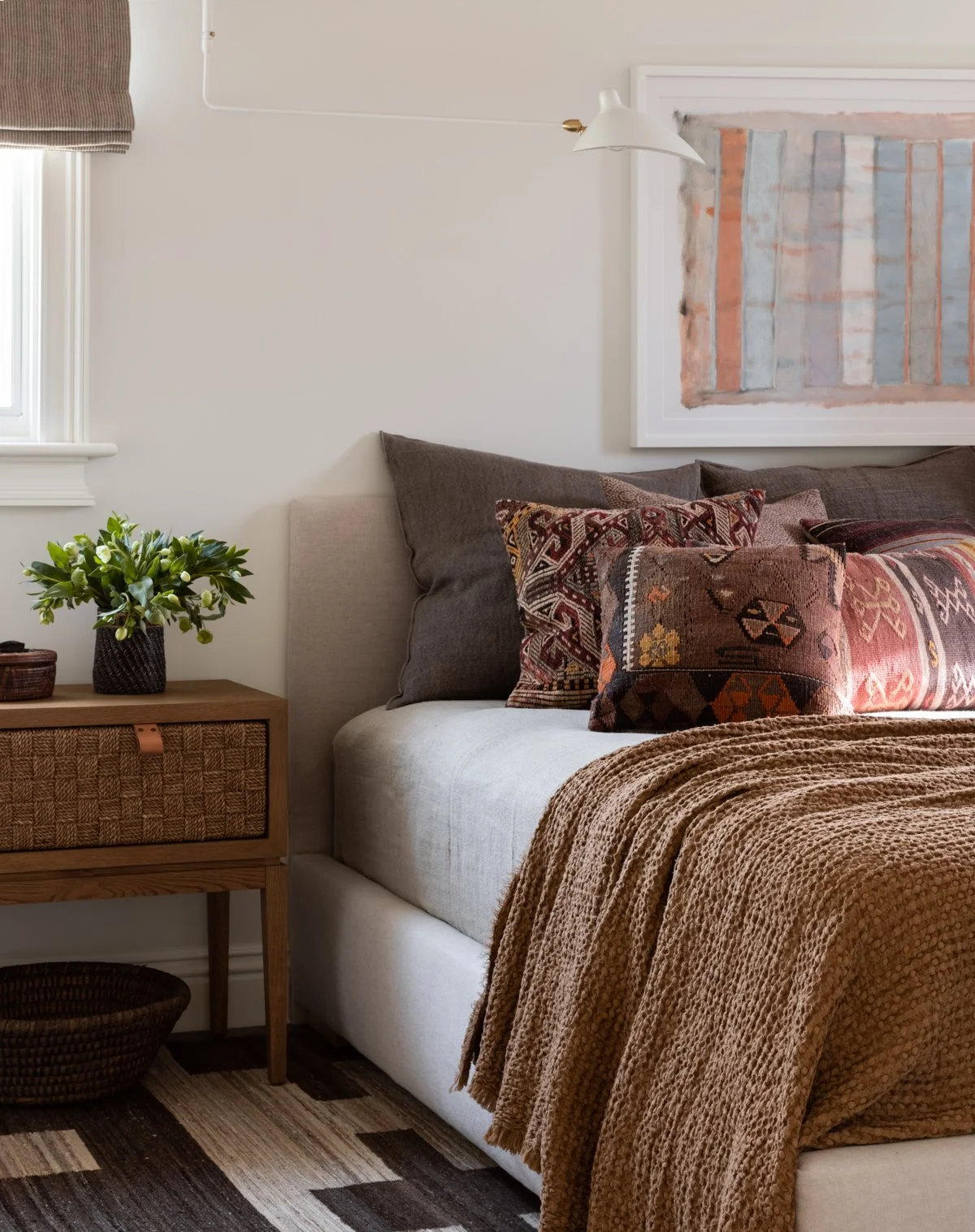
Modern, in the strict sense, is a 20th-century idea about stripping things down. Clean lines. No ornament. The honesty of a structure showing itself. I love those bones, and my eye got built on them in the years I spent moving around Europe looking at buildings most people walk past. But classic modernism can be cold. Glass, steel, a lot of white, hard edges that look beautiful in a photograph and feel like a dentist's office at 7am when you're standing on the tile in bare feet. Warm modern keeps the restraint and throws out the chill. Same quiet lines, same lack of clutter, but the materials shift to linen and plaster and oak rather than lacquer and glass. The palette draws from earth: terracotta, clay, sand, the gray-brown of a river stone. You feel held in the room instead of judged by it. That's the whole thing, really. I leaned hard into exactly that approach after the 2018 Woolsey Fire took my family home and every piece I owned. When you lose all of it and start from zero, you learn fast what you actually want to live with. Hard and shiny wasn't it. I wanted things with a hand in them.
The Visual Differences You Can Actually See
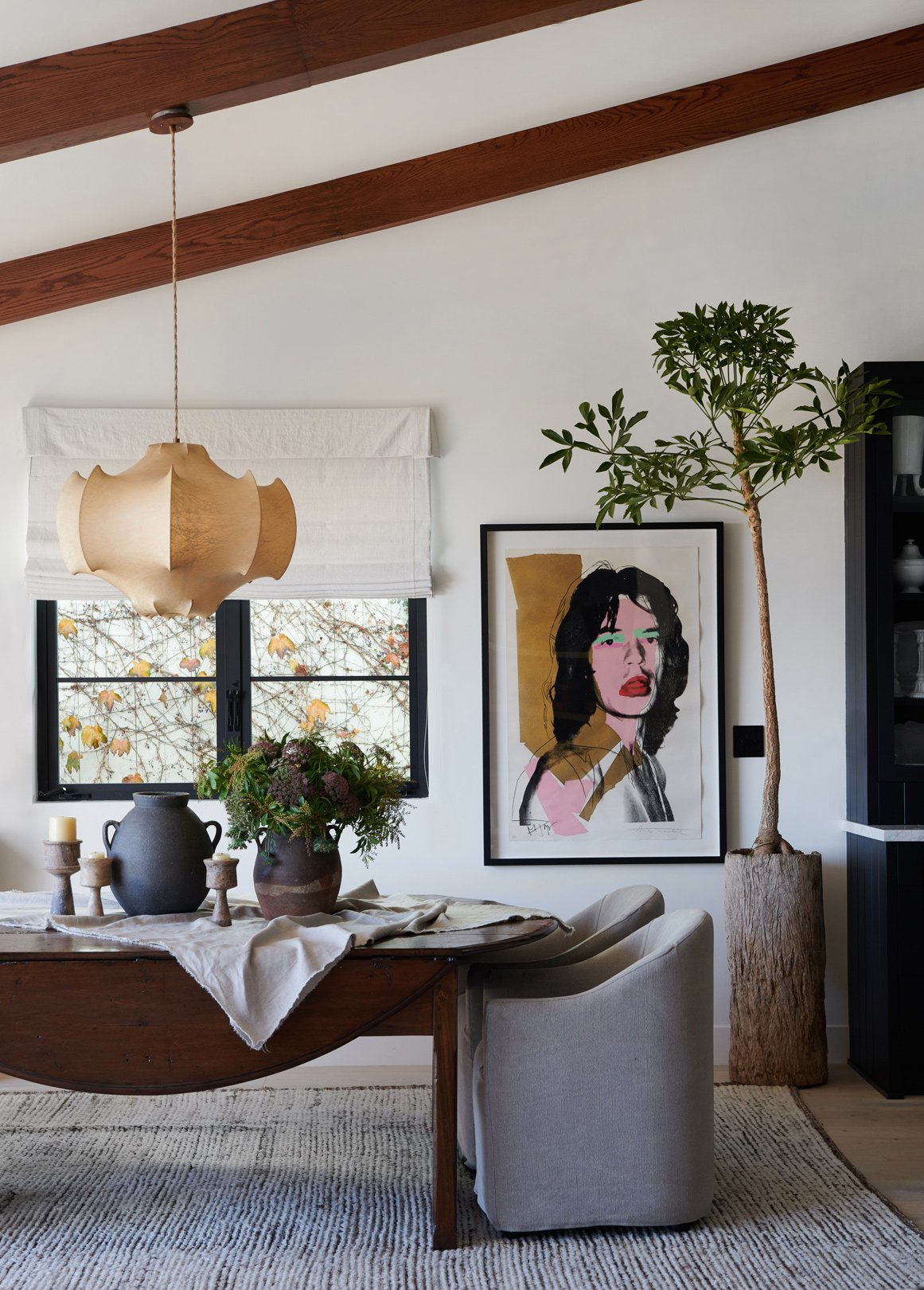
Stand in a room and look at the surfaces. That tells you almost everything. A cold-modern room reflects at you. Polished concrete, mirror, high-gloss cabinetry, glass bouncing the light straight back. A warm contemporary interior absorbs instead, and the difference is physical. Limewash drinks light and goes soft. Stone gets honed rather than polished. Unlacquered brass patinas toward honey over ten years instead of staying mirror-bright, and the room deepens with it. Here's a quick gut-check on the two camps:
- Cold modern: white, gray, black; chrome and glass; sharp 90-degree everything; high gloss; matched sets.
- Warm modern style: earth tones; aged brass and oak; a few soft curves; matte and honed finishes; a custom piece sitting next to a rare vintage one.
Color is the loudest signal. I build most of my rooms off a warm neutral base and let the depth come from material, and I wrote a whole piece on building a warm modern palette out of terracotta, clay, sand, and stone for the long version of how that works. Sand on the walls. A rust-colored linen on the sofa. The cool version of that same room would be greige, and the difference is night and day. The mix matters too. A pure modern room is often all-new, all-matched, bought in one season. The warm modern rooms I design nearly always have one old thing carrying the soul of the space: a 9-foot Danish credenza in oiled teak, or a 1960s rattan chair I found and sat on myself before I bought it.
What It Says About How You Live
That's the part people skip. It's also the part that matters most. A house is a set of instructions for how you spend your day. So before you pick a style, look at how you actually live, not how you wish you lived in a magazine. Cold modern rewards a certain discipline. It wants surfaces clear and edges crisp, and if you've got two kids, a golden retriever, and a habit of dropping mail on the counter, that white lacquer kitchen is going to push back on you every single day of its life. Warm modern forgives. The oak shows a watermark and just looks more like itself. The linen slipcover comes off and goes in the wash. Honed stone hides a thousand sins that polished marble would broadcast to the room. So ask yourself an honest question: do you want a home that performs, or a home that relaxes? Both are valid, and I've designed both. The people who call me in Brentwood and Malibu and lately up in Montecito are almost all in the second group, even the ones who walked in asking for something sleek. There's a California reason for that, and it's no accident the aesthetic grew up here.
Why California Got There First
California modern interior design has always had to answer to the outdoors. The light here is enormous. At 4pm a west-facing wall in the Palisades goes gold, and a cold white room turns clinical and blue, where a plaster wall in a warm tone just glows and holds the heat of the day. Californians built modernism around indoor-outdoor living before anyone called it that. Sliding walls of glass, a patio that's really another room, the line separating the inside from the garden gone soft. Once your living room opens onto a hillside of dry gold grass and gray-green oaks, the materials inside almost have to answer the materials outside. You bring the stone in. You bring the wood in. You stop arguing with the field around you and start agreeing with it. That's the heart of warm modern, and it's why the style took root from Santa Monica up the 101 to Summerland and Santa Barbara long before it had a hashtag. I wrote more about the roots of it in my piece on California modern and what the style really is, for anyone who wants the history behind the look.
The Material Differences, Up Close
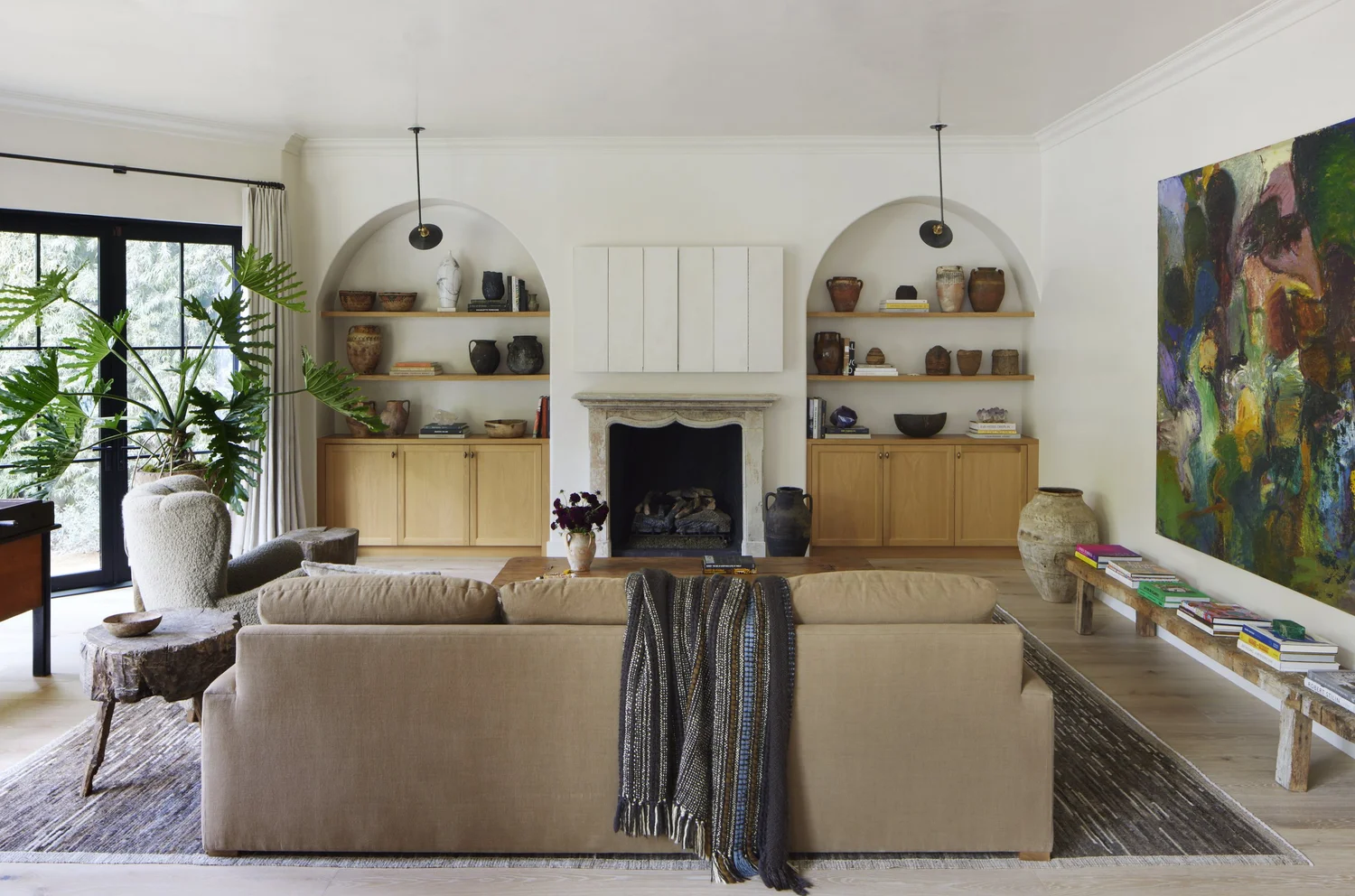
I'm the daughter of a contractor, so I think about all of it in terms of what it does in year ten, not what it looks like on delivery day. Warm materials age toward you. White oak gets a deeper honey as the oil and sun work on it. Unlacquered brass darkens at the points your hands touch it and stays bright where they don't, so a cabinet pull ends up telling the story of who lives there. Real plaster has a chalky, mineral hand to it and a depth no paint can fake. Limewash moves and clouds over a wall so the surface is never flat. Cold materials run the other direction. Delivery day is their peak. From there it's downhill: a chip in lacquer stays a chip forever, and a scratch in polished concrete catches the light and won't let go of it. Here's where the trade-off comes in, because real materials aren't free and they aren't foolproof.
- Limewash and plaster cost more than paint and want a skilled hand. Get a bad plasterer and you'll see it forever.
- Unlacquered brass will patina whether you like it or not. Some people hate the change. If you're one of them, this isn't your finish.
- Natural stone stains. Honed marble near a coffee maker will ring. You live with it or you seal it and stay vigilant.
- Linen wrinkles and that's the point. If a rumpled sofa reads as messy to you, you want performance fabric, and that's a fair choice.
I start nearly every project with the materials, not the floor plan, and I explained why in my piece on why California homes begin with light. The palette decides the mood. Everything else follows.
What This Means for an Actual Renovation
Practically speaking, warm modern is a build that hides its money in the surfaces. Cold modern often spends on objects and showpiece elements. The plaster, the wide-plank oak, the honed slab, the custom oak cabinetry without a visible hinge: that's where the budget goes, and it doesn't show up in a photo the way a sculptural light fixture does. Set your expectations accordingly. A plaster wall takes longer than a painted one. A vintage credenza takes patience to find, sometimes a year of looking, because I won't put a mediocre piece in a good room just to fill the wall. I source constantly, I sell vintage on 1stDibs, and I would rather wait than settle. That's a real timeline cost, and you should know it going in. The upside is a house that gets better rather than dated. I told Forbes the same thing for a 2026 trends piece: the shiny stuff dates, the warm stuff just deepens.
A Simple Way to Figure Out Your Camp
Sit in your favorite room and answer these honestly, not aspirationally.
- When you picture the home that calms you down, is it bright and crisp, or warm and low-lit?
- Does an old worn thing read to you as soul, or as something that needs replacing?
- Do you want surfaces to stay perfect, or do you want them to age and change?
- Is clutter-free discipline easy for you, or a daily battle?
- Standing in a hard, shiny room, do you feel energized or do you feel a little cold?
If you kept landing on warm, low light, the old credenza, the surface that ages, the room that forgives you, then you're a warm modern person and you have been all along. Now you've got the words for it. And if you landed somewhere in the middle, that's fine too. Most real houses live in the overlap, and a good designer's job is finding your exact spot on that line. If any of this sounds like the home in your head, you can see more of how I work at Janette Mallory Interiors, or just book a consultation and we'll talk it through. The light. The materials. The way you actually want to live in the place.